
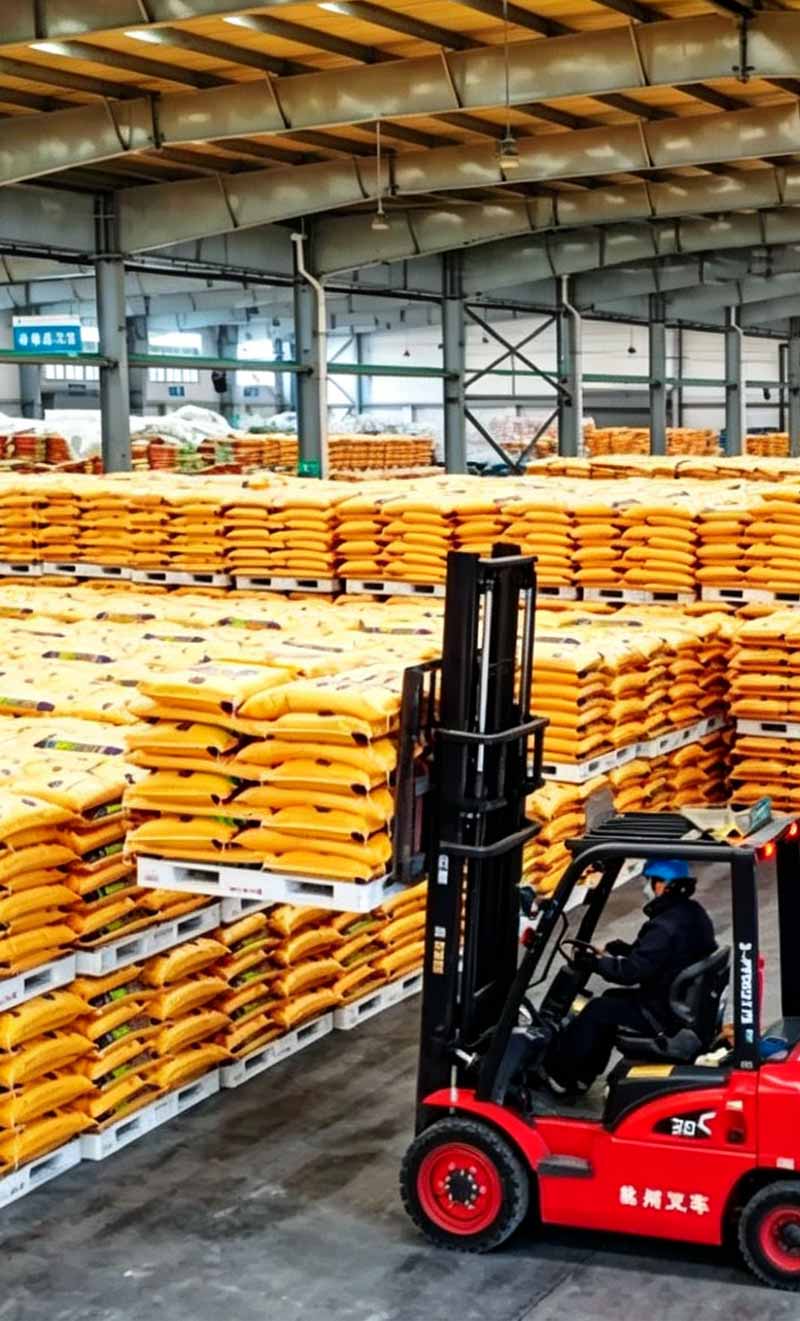

Drip irrigation has changed the way growers apply fertilizers. Instead of spreading a large amount of material across an entire field, nutrients can be delivered directly into the active root zone through irrigation water.
That precision creates an opportunity for humato potássio, but it also creates stricter requirements.
A product intended for drip irrigation must dissolve reliably, pass through filters and emitters, remain reasonably stable in the irrigation water, and fit the existing fertilizer program. A potassium humate that works well as a soil-applied powder is not automatically suitable for fertigation.
For growers, agronomists, distributors, and fertilizer importers, the important question is therefore not simply:
“Can potassium humate be used in drip irrigation?”
The better question is:
“Which potassium humate grade can be used safely and effectively in my irrigation system, and how should it be applied?”
Índice
Why Potassium Humate Fits Drip Irrigation Systems
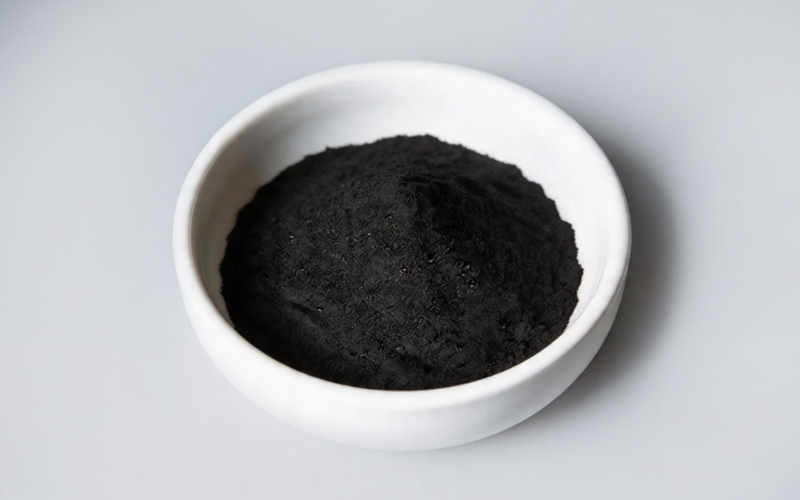
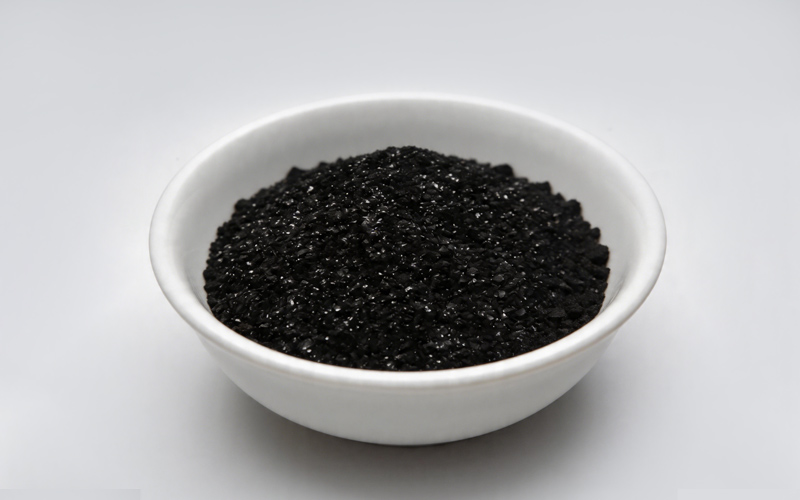
Potassium humate is produced from humic-rich materials and converted into a potassium-containing humate form. Commercial agricultural grades can vary greatly in concentration, solubility, particle size, potassium content, and insoluble residue.
The most important advantage for drip irrigation is water dispersibility or solubility.
A suitable soluble grade can be introduced into irrigation water and delivered toward the root zone without requiring the same mechanical incorporation needed for many dry soil amendments.
This makes potassium humate particularly relevant for:
- Greenhouse vegetables
- Orchards
- Vineyards
- Berry production
- Field vegetables
- Melons
- Nursery crops
- Intensively fertigated crops
- Fields where fertilizer is already delivered through irrigation
Humic substances form part of the more stable fraction of soil organic matter and interact with mineral and nutrient components in soil. The FAO overview of soil organic matter discusses the relationship between humic substances, nutrient availability, soil structure, water-holding characteristics, and cation exchange processes.
However, these potential functions should not lead growers to treat potassium humate as a universal solution.
Performance depends on soil, crop, formulation, application method, rate, and environmental conditions.
What Potassium Humate Does in the Root Zone
When potassium humate is injected through irrigation, its purpose is usually broader than simply adding potassium.
Supports the Soil–Nutrient Interface
Humic materials contain functional groups capable of interacting with mineral ions.
These interactions are one reason humic substances are studied in relation to nutrient availability and soil chemistry.
O USDA Agricultural Research Service identifies humic acid, fulvic acid, and humin as important components associated with soil organic matter and soil particle interactions.
In practical crop management, potassium humate is commonly integrated with fertilization programs to support the root-zone environment rather than used as a stand-alone nutrient package.
Adds a Potassium Contribution
Potassium humate normally contains potassium, commonly expressed on fertilizer specifications as K₂O.
The amount actually supplied to the crop depends on two numbers:
K₂O concentration × application rate
For example, a product containing potassium does not necessarily provide enough K₂O to satisfy the full requirement of tomatoes, potatoes, grapes, or other potassium-demanding crops.
The potassium contribution should therefore be included in the nutrient calculation but should not automatically replace the main potassium fertilizer.
Supports Root-Zone Management
Potassium humate is frequently included in programs designed around:
- Root establishment
- Soil conditioning
- Nutrient-use efficiency
- Organic matter management
- Intensive cropping
- Stress-prone soils
A recent review indexed through FAO AGRIS notes that humic-substance effects are influenced by factors including application rate, soil properties, source, and production conditions.
This variability is important: the same application rate should not be assumed to produce identical results in every soil.
Which Potassium Humate Grade Works Best for Drip Irrigation?
Not every black powder or flake sold as potassium humate belongs in a drip system.
Before selecting a product, evaluate at least six specifications.
| Specification | Why It Matters in Drip Irrigation |
|---|---|
| Water solubility | Determines how much material can enter solution |
| Water-insoluble matter | High residue can increase filter and emitter problems |
| Humic acid content | Indicates the declared humic fraction |
| K₂O | Determines the potassium contribution |
| pH | Helps assess tank compatibility |
| Particle size | Influences dissolution speed and handling |
| Moisture | Affects concentration, storage, and caking |
| Batch consistency | Determines whether performance remains predictable |
O Chunlei Agriculture potassium humate is positioned as a water-soluble grade for soil application and drip irrigation, with declared humic acid, K₂O, solubility, insoluble matter, pH, and fineness specifications.
High Solubility Is More Important Than Appearance
Buyers sometimes select shiny flakes or very dark powder because they assume appearance indicates quality.
It does not.
A useful drip-irrigation product should be judged primarily through measurable parameters.
Ask the manufacturer to demonstrate:
- Dissolution at the recommended concentration
- Residue after dissolution
- Behavior in hard water
- Filtration performance
- Stability after standing
- Compatibility with common fertilizer programs
A visually attractive product that leaves substantial sediment may be less suitable than a less distinctive-looking product with consistent solubility.
How Much Potassium Humate Should You Apply?
There is no universal potassium humate dosage for every crop.
Application rate depends on:
- Humic acid concentration
- Product solubility
- Crop
- Growth stage
- Soil organic matter
- pH do solo
- Salinidade
- Existing fertilizer program
- Irrigation frequency
- Application objective
- Local agronomic recommendations
For the potassium humate formulation currently listed by Chunlei Agriculture, the manufacturer’s reference base-application rates include approximately:
| Crop Type | Reference Product Rate | Typical Timing |
| Wheat, corn, rice | 500–800 g/mu | Before sowing or transplanting |
| Tomatoes, cucumbers, peppers | 800–1000 g/mu | Several days before transplanting |
| Apples, citrus, grapes | 1–1.5 kg/mu | Base fertilization or before spring growth |
One Chinese mu is approximately 667 m², so these manufacturer reference rates correspond roughly to:
- Field crops: 7.5–12 kg/ha
- Vegetables: 12–15 kg/ha
- Fruit crops: 15–22.5 kg/ha
These are product-specific reference rates, not universal recommendations for every potassium humate formulation.
A more concentrated or differently formulated product may require a different rate.
Why “More” Is Not Automatically Better
Humic products can be useful at relatively modest concentrations.
Excessive application may:
- Add unnecessary input
- Alter tank solution pH
- Increase incompatibility risk
- Increase residue if product solubility is poor
- Disturb an otherwise balanced nutrient program
Start from the manufacturer’s technically supported rate and adjust according to soil tests and field observations.
Potassium Humate Application by Crop Type
Different crops benefit from different timing strategies.
Legumes
Tomatoes, peppers, cucumbers, eggplants, and melons usually develop rapidly after transplanting.
A practical potassium humate program may focus on:
- Pre-transplant soil preparation
- Early root establishment
- Early vegetative development
- Selected fertigation stages during intensive nutrient demand
In greenhouses, pay particular attention to electrical conductivity and fertilizer accumulation.
Potassium humate should not be used to hide excessive salinity caused by overfertilization.
Árvores Frutíferas
Fruit trees have a much larger permanent root system than annual vegetables.
Applications may be integrated with:
- Post-harvest soil management
- Autumn base fertilization
- Pre-bud-break irrigation
- Early root-growth periods
- Selected fruit-development stages
Injection should deliver the solution into the active root zone rather than concentrate it immediately next to the trunk.
Grapes
For vineyards, the practical objective may vary between young vines and mature producing vines.
Young vines may require greater attention to root establishment, while mature vineyards may integrate humic inputs with overall soil and fertigation management.
Do not increase potassium humate simply because grapes require potassium. The actual K₂O contribution still needs to be calculated.
Culturas de campo
Corn, wheat, and other broad-acre crops generally have lower-value fertigation intensity than greenhouse vegetables.
Where drip or irrigation injection systems are available, potassium humate may be concentrated around early soil preparation and root establishment rather than applied very frequently.
Nursery and Transplanted Crops
Young root systems are sensitive to salinity and concentrated fertilizer solutions.
Use conservative rates and avoid applying highly concentrated tank solutions directly around tender roots.
The Correct Mixing and Injection Sequence
A large percentage of fertigation problems are caused not by the fertilizer itself but by incorrect mixing.
A safer process looks like this:
Step 1: Check the Irrigation Water
Before mixing, understand:
- pH
- Hardness
- Calcium
- Magnesium
- Bicarbonates
- Electrical conductivity
- Suspended solids
Water quality affects fertilizer behavior.
Step 2: Fill the Mixing Tank With Water
Do not begin by placing dry potassium humate at the bottom of an empty tank.
Add water first.
Step 3: Add Potassium Humate Slowly
Introduce the material gradually while circulating or stirring the water.
Avoid dumping an entire bag into one location.
This reduces clumping and improves wetting.
Step 4: Allow Complete Dissolution
Give the material enough time to disperse completely.
When necessary, prepare a concentrated stock solution separately and filter it before injection.
Step 5: Prepare Other Fertilizers Separately
Calcium fertilizers, phosphorus sources, acids, micronutrients, and other concentrates should not automatically be poured directly into concentrated potassium humate.
Prepare them separately first.
Step 6: Conduct a Jar Test
Mix small quantities using the actual irrigation water.
Watch for:
- Flakes
- Clouds
- Sediment
- Gel formation
- Layer separation
- Unusual heat
- Rapid pH changes
No visible reaction does not guarantee perfect long-term compatibility, but a failed jar test is a strong warning.
Step 7: Inject During the Middle of Irrigation
A common fertigation strategy is:
- Begin with clean water.
- Establish normal system pressure.
- Inject fertilizer.
- Finish with clean irrigation water.
The final clean-water period helps move the nutrient solution into the root zone and flush fertilizer remaining in lines.
Exact timing depends on irrigation-system design and field conditions.
Water Quality Can Determine Whether Potassium Humate Works Smoothly
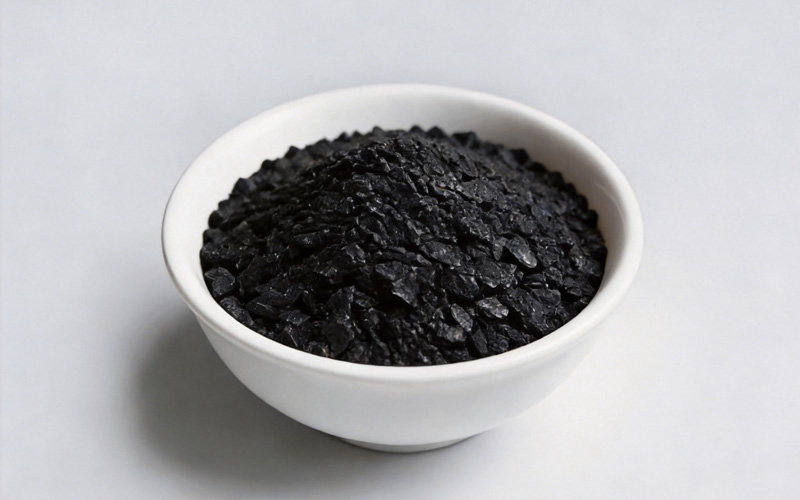
The same product can behave differently in two farms because irrigation water is different.
Hard Water
Hard water contains significant concentrations of calcium and magnesium.
Highly concentrated solutions can create compatibility challenges, especially when several fertilizer products are mixed together.
A potassium humate described as hard-water resistant should still be tested using the buyer’s real water source.
High Bicarbonates
High bicarbonate water can influence solution chemistry and system deposits.
Agronomists should evaluate irrigation water as part of the complete fertigation program rather than focusing on one fertilizer.
Saline Irrigation Water
Humic inputs are sometimes incorporated into programs for salt-affected soils, but they do not remove the need for proper salinity management.
Good management may also require:
- Drainage
- Leaching
- Irrigation scheduling
- Water-source improvement
- Salt monitoring
- Soil amendments where appropriate
Potassium humate should therefore be one tool within the program rather than the entire program.
What Should Not Be Mixed Directly With Potassium Humate?
Compatibility depends on formulation and concentration, so universal statements should be avoided.
However, particular care is appropriate with:
Strong Acids
Humic materials can behave differently as solution pH falls substantially.
Highly concentrated acids should not be poured directly into a concentrated humate stock solution.
High-Concentration Calcium Fertilizers
Calcium-containing concentrates may increase precipitation or flocculation risks in some mixtures.
Prepare separately and conduct a compatibility test.
Concentrated Magnesium Products
Similar caution applies when combining concentrated mineral solutions.
Crop Protection Products
Do not assume a fertilizer is compatible with every pesticide, fungicide, biological product, or plant-growth regulator.
Check product labels and test compatibility before combining tank mixes.
Unknown Multi-Ingredient Products
Products containing several undisclosed ingredients create greater uncertainty.
When the composition is unclear, separate applications are usually easier to manage.
When Should Potassium Humate Be Applied?
Application timing should be connected to a crop objective.
Antes Plantio
This is useful when the goal is preparing the root-zone environment before seedlings or seeds begin rapid growth.
Potassium humate can be delivered through pre-plant irrigation or incorporated as part of the base fertilizer program.
After Transplanting
A carefully managed application can be integrated into early root-establishment programs after transplants have recovered sufficiently.
Avoid excessive fertilizer concentration around newly transplanted roots.
During Active Vegetative Growth
Potassium humate may be incorporated with the existing fertigation program during periods of rapid root and canopy development.
Before Major Nutrient-Demand Stages
Depending on the crop, applications may be scheduled ahead of periods of high nutrient demand.
The exact strategy should be based on crop physiology and soil fertility rather than a fixed calendar.
Potassium Humate in Saline, Sandy, and Continuously Cropped Soil
Soil type changes the reason for using potassium humate.
Sandy Soil
Sandy soils often have:
- Lower nutrient retention
- Faster drainage
- Lower organic matter
- Lower cation exchange capacity
Humic inputs may be incorporated into a broader soil organic matter strategy, but repeated organic matter additions are usually more important than relying on one concentrated product alone.
Saline Soil
Potassium humate is sometimes included in saline-soil programs because humic substances interact with soil chemistry and nutrient management.
However, salinity must first be diagnosed.
Measure:
- Electrical conductivity
- Sodium
- Calcium
- Magnesium
- Irrigation-water salinity
- Soil drainage
Do not assume all “saline” fields require the same treatment.
Continuously Cropped Soil
Greenhouses and intensive vegetable fields frequently experience repeated nutrient loading, organic matter decline, salinity accumulation, and changes in root-zone biology.
Here, potassium humate can be combined with organic matter management and, where appropriate, bio organic fertilizer rather than used alone.
The objective should be rebuilding the production system, not repeatedly adding one input.
Common Potassium Humate Drip Irrigation Mistakes
Mistake 1: Buying by Humic Acid Percentage Alone
A high percentage is not enough.
For irrigation use, solubility and insoluble residue may be equally important.
Mistake 2: Ignoring Irrigation Water
A product tested in clean laboratory water may behave differently in hard well water.
Mistake 3: Mixing Everything in One Concentrated Tank
This increases chemical compatibility risks.
Mistake 4: Applying Excessive Rates
Higher application rates do not guarantee better crop response.
Mistake 5: Using Potassium Humate as Complete Fertilizer
It should be integrated with nutrient calculations rather than substituted blindly for nitrogen, phosphorus, potassium, calcium, magnesium, or micronutrient fertilizers.
Mistake 6: Injecting Into a Dirty System
Existing mineral deposits, organic debris, and partially blocked emitters complicate fertigation.
Maintain the irrigation system independently of humic applications.
Mistake 7: Skipping Field Trials
Even a high-quality product should be tested under the farm’s actual conditions before a large-scale program is established.
How Buyers Should Evaluate a Potassium Humate Supplier
For agricultural distributors and bulk importers, product selection involves more than choosing a specification from a catalog.
Request a Recent COA
The certificate of analysis should include major agreed specifications.
Depending on the product, these may include:
- Humic acid
- K₂O
- Solubility
- Insoluble matter
- Moisture
- pH
- Particle size
Ask About Test Methods
Two suppliers may report similar values using different analytical methods.
Testing methodology is especially important when comparing humic materials internationally.
Test Solubility Yourself
Ask for a production sample.
Use:
- Clean water
- Hard water
- Actual farm irrigation water
Compare:
- Dissolution time
- Sediment
- Foam
- Filtration
- Stability after standing
Test More Than One Batch
A single excellent sample does not prove manufacturing consistency.
For long-term purchasing, batch-to-batch stability matters.
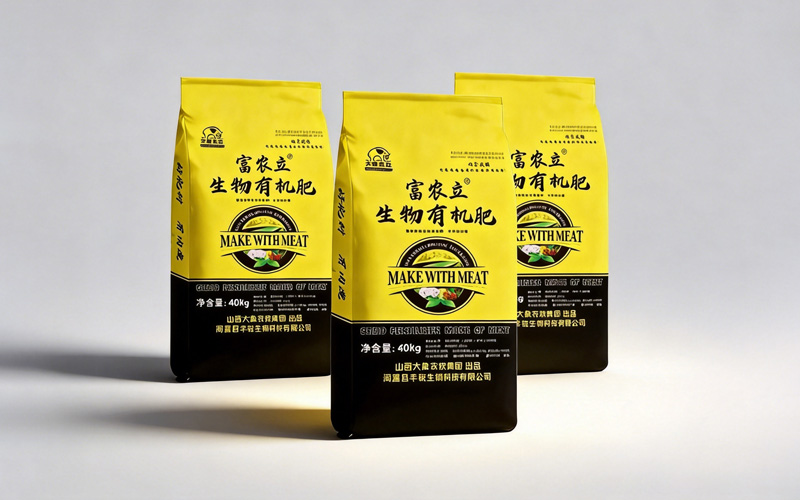
Review Packaging
Humic powders can absorb moisture.
Strong moisture-resistant packaging reduces:
- Caking
- Contamination
- Product deterioration
- Handling problems
Ask About Production Capacity and Traceability
B2B buyers should verify whether the factory can reproduce the same agreed specification over repeated orders.
For product specifications and application options, buyers can review the potassium humate product page or contact the technical team with crop, irrigation-water, soil, and packaging requirements.
A Simple Pre-Purchase Potassium Humate Test
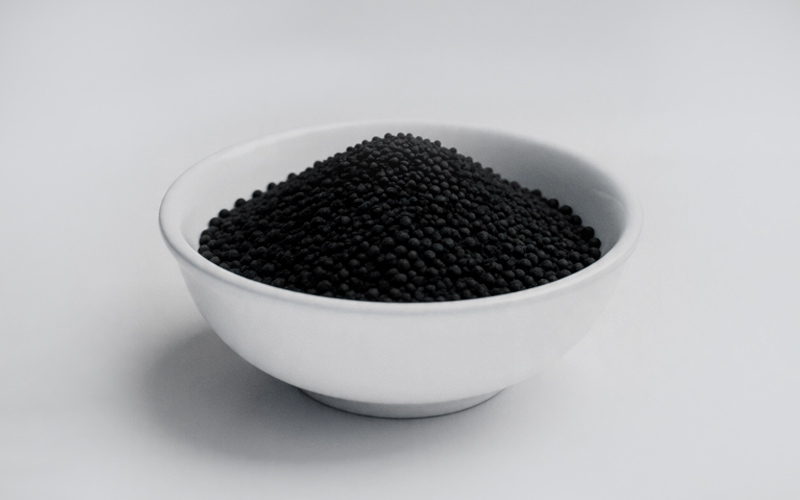
Before purchasing a large shipment, a buyer can perform a practical screening test.
| Test | What to Check |
| Visual inspection | Uniform powder or flakes, no unusual contamination |
| Water test | Dissolution speed and visible residue |
| Hard-water test | Flocculation or precipitation |
| Filter test | Material remaining after filtration |
| Standing test | Sediment after several hours |
| pH test | Compatibility with supplier specification |
| COA comparison | Whether sample matches declared batch |
| Trial application | Crop and irrigation-system behavior |
The objective is not to replace laboratory testing.
It is to identify obvious handling problems before committing to a commercial volume.
Perguntas frequentes
Can potassium humate be used through drip irrigation?
Yes, provided the selected grade has suitable water solubility and low insoluble matter.
Always check the manufacturer specification and test the product with the actual irrigation water before large-scale use.
How often should potassium humate be applied?
Frequency depends on formulation, crop, soil, application objective, and existing fertilizer program.
Some programs emphasize a pre-plant or basal application, while others use divided applications during the crop cycle.
Follow product-specific agronomic guidance rather than a universal schedule.
Will potassium humate clog drip emitters?
A high-quality soluble grade is designed to minimize residue, but clogging can still occur because of poor-quality product, hard water, incompatible fertilizers, dirty irrigation lines, or incorrect mixing.
Solubility testing and filtration remain important.
Can potassium humate be mixed with calcium nitrate?
Concentrated humate and calcium-containing fertilizer should not automatically be mixed together.
Prepare products separately and perform a jar test using the actual concentrations and irrigation water.
Can potassium humate replace potassium nitrate or potassium sulfate?
Usually not on a direct basis.
Calculate the K₂O supplied by potassium humate and compare it with the crop’s total potassium requirement.
Its primary role in many programs is as a humic soil and nutrient-management input.
Is potassium humate suitable for hard water?
Some grades are formulated to perform well in hard water, but the claim should be verified.
Use the buyer’s real irrigation water for testing before commercial application.
Is powder or flake potassium humate better for drip irrigation?
Physical form alone does not determine performance.
Solubility, insoluble matter, concentration, dissolution speed, and manufacturing consistency are more important.
What information should I send a supplier before asking for a recommendation?
Provide:
- Crop
- Cultivation area
- pH do solo
- Soil EC if available
- Irrigation-water analysis
- Método de irrigação
- Current fertilizer program
- Desired application timing
- Packaging requirements
- Target market or registration requirements
Better information allows the supplier to recommend a more appropriate grade and application method.
Conclusão
Potassium humate can fit well into modern drip-irrigation programs, but successful use depends on much more than simply dissolving a black fertilizer in water.
The correct product should combine appropriate humic content with reliable solubility, low insoluble residue, consistent K₂O, suitable pH, and stable manufacturing quality.
The application program should then account for crop type, soil condition, irrigation-water chemistry, fertilizer compatibility, and actual nutrient requirements.
For growers, the most important principle is to use potassium humate for a defined agronomic purpose rather than applying it simply because it is a popular soil amendment.
For distributors and bulk buyers, the strongest purchasing decision comes from combining technical documentation with real testing: examine the COA, evaluate solubility, test hard-water compatibility, inspect residue, compare batches, and conduct a crop trial.
That approach turns potassium humate from a generic fertilizer additive into a more controlled component of a professional fertigation program.